Electric vs Diesel Forklift Cost Comparison India
Category: Forklift, Material Handling | 20 March 2026
The Changing Warehouse Scene
Think back to when every warehouse relied on diesel forklifts. They were tough, worked long hours, and could handle any load. But they were also noisy, emitted a lot of smoke, and cost more to run each year. Today, things are changing. Lithium-ion electric forklifts glide quietly through modern factories and distribution centres. And the numbers speak loudly—by 2030, experts say, about one in four forklifts in India will be powered by lithium batteries. This isn’t just about going green—it’s about adopting future forklift technology and making smarter choices for businesses.
The Real Benefits of Electric Forklifts
Electric forklifts aren’t just quieter—they’re safer and easier to manage. They come with smart sensors that help prevent accidents and keep drivers alert, which really matters since 70% of forklift mishaps can be avoided with a little more tech and awareness. Electricity also beats diesel on air quality: no fumes, no exhaust. IP67-rated components keep electric forklifts working well regardless of dust or heavy rain.
Running and fixing diesel forklifts can get expensive; there’s constant engine servicing and oil changes. Lithium-ion batteries also recharge quickly, so there’s less downtime between shifts. And all this drives home the point—material handling innovation is finally making warehouses safer and more efficient.
Cost Comparison and Total Cost of Ownership
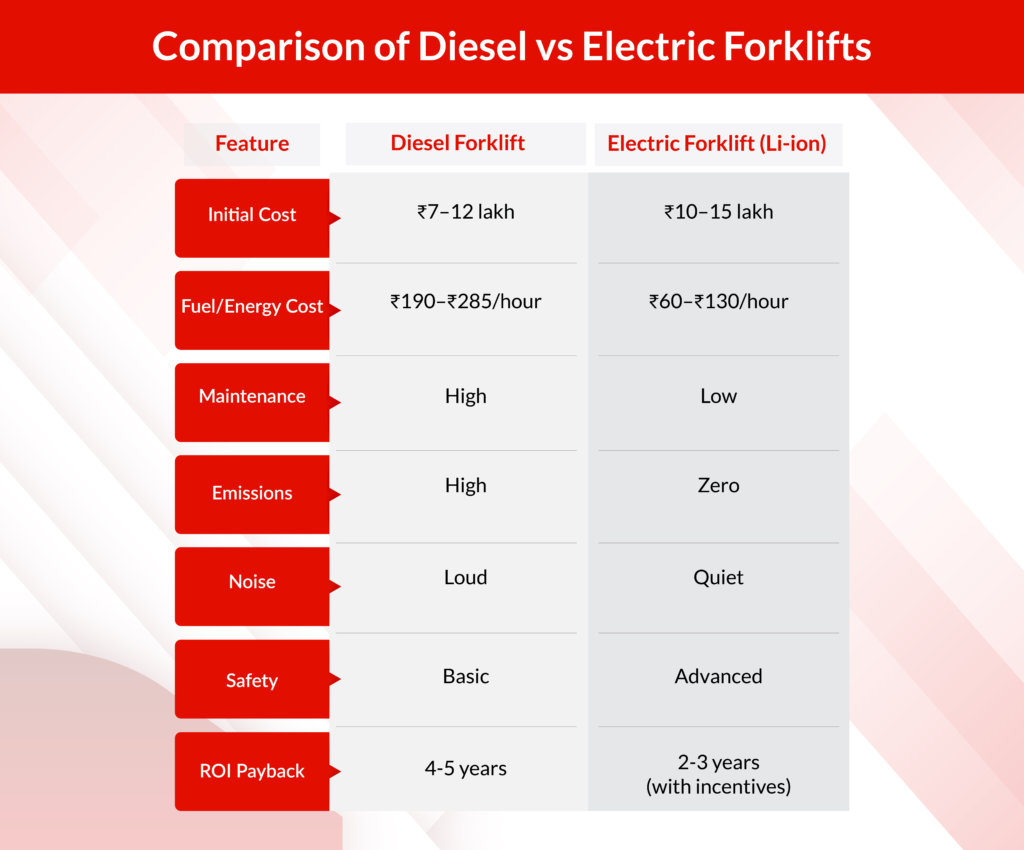
Electric forklifts cost more upfront—about 30% higher than diesel (₹10–15 lakh vs ₹7–12 lakh). But the numbers quickly turn in their favour once you account for running and maintenance costs.
Fuel and Energy:
Diesel forklifts consume around 2–3 litres diesel per hour, and at ₹93–95 per litre, that adds up fast—nearly ₹200–₹285 every hour of operation. Electric forklifts, on the other hand, draw about 7–9 units of power per hour, costing just ₹60–₹130 at an average of ₹7.5 per kWh. That’s over 50% lower energy cost for every hour of use.
Maintenance:
Electric forklifts have fewer moving parts—no engine oil, filters, or exhaust systems to service. This not only cuts workshop visits but also minimizes downtime, which translates into steady productivity.
Battery Lifespan and ROI:
Lithium-ion batteries typically last 5–7 years, nearly twice as long as traditional lead-acid ones. Combined with reduced servicing, most warehouses recover their investment in just 2–3 years, compared to 4–5 years for diesel. In short, while diesel forklifts may seem cheaper to buy, electric ones consistently outperform them in total cost of ownership, paying back the extra upfront cost through lower operating expenses, higher uptime, and better long-term efficiency.
Real Results: Vedanta Aluminium’s Electric Leap
Take Vedanta Aluminium’s example. They switched to a fleet of sixty-six lithium-ion electric forklifts—the biggest in India. In one year, this cut diesel use by more than 8.4 lakh litres and carbon emissions by roughly 2,500 tonnes of CO₂.. The company also uses smart monitoring to keep machines running efficiently and safely.
Power Reliability & Backups in India
While the cost and performance advantages are clear, power reliability remains a key factor for Indian warehouses. Power cuts aren’t rare, and a dead forklift is no help to anyone. That’s why many warehouses invest in backup systems, UPS units, generators, advanced battery banks, and innovative charging plans.
SANY’s electric forklifts, such as the SCP30 and SCP50, address this concern with super-fast charging—from 20% to 90% in just 1–1.5 hours—and continuous eight-hour operation cycles. Fleet managers can rely on cloud-based tools to track battery health, schedule charging intelligently, and ensure zero downtime.
Charging infrastructure—dedicated points for each machine, smart scheduling, and reliable support—has become a crucial component of successfully running an electric fleet in India.
Why SANY Electric Forklifts Make Sense
Diesel forklifts aren’t going away tomorrow, but sticking with them means accepting higher long-term costs, more breakdowns, and bigger fuel bills. Electric forklifts, especially those from SANY, offer better reliability, lower maintenance, and smarter solutions for modern warehouses—not to mention saving money and cutting pollution.
Sany’s advanced electric range, including the SCP30 and SCP50, redefines energy efficiency and cost savings. Every two SANY electric forklifts deliver the same economic benefits as three fuel-powered forklifts, while offering continuous operations with an eight-hour work cycle and cloud-based fleet monitoring for maximum uptime.
Diesel may still have a place in heavy outdoor operations, but for most Indian warehouses, the math—and the market—favor electric. With SANY’s proven performance and innovation, businesses can achieve faster ROI, smarter management, and a cleaner footprint. Ready to switch? Contact SANY today to explore the next generation of electric forklifts built for Indian conditions.
Related Blog
Future Electric Forklift Technology Trends for 2026 and Beyond
Electric forklifts hold over 70% of the market in many regions, with projections putting the segment above $100 billion by 2034. The shift isn't driven by regulation alone—the operational case has become harder to ignore. These aren't incremental improvements. They're changing the cost structure and uptime expectations for material handling operations. Here's a closer look at five technologies reshaping electric forklifts and what the data shows about their impact on productivity, safety, and operating costs. Battery Technology Advancements: The Power Behind the Revolution Battery technology has made real progress. Lithium-ion batteries achieved energy densities of 150-200 Wh/kg in 2024, up from 90-100 Wh/kg five years earlier. That's a significant jump that changes how forklifts operate. Today's lithium-ion batteries deliver energy efficiency up to 95% compared to lead-acid batteries' 80% efficiency. They charge in 1-2 hours, supporting 8-16 hour operational shifts. Opportunity charging lets forklifts top up during short breaks without affecting battery performance or lifespan. Lithium-ion isn't the only option anymore. Last year, manufacturers launched a pilot for electric forklift trucks equipped with sodium-ion batteries. These are designed for light-load operations and offer rapid charging, extended cycle life, and lower operational costs thanks to sodium's stable and abundant supply. Sodium-ion technology is still developing, but it presents an interesting alternative that could change cost structures across the industry. While batteries get most of the attention, hydrogen fuel cells are gaining ground. About 50,000 hydrogen forklifts operate worldwide as of 2024, mostly in the U.S. The benefits are clear: these forklifts refuel in just 2-3 minutes and produce zero emissions when using green hydrogen. Plus, you can store hydrogen on site without needing complex charging infrastructure. For operations running multiple shifts with minimal downtime, hydrogen fuel cells make sense. The technology combines the environmental benefits of electric power with the operational flexibility that internal combustion engines traditionally provided. Autonomous and Semi-Autonomous Electric Forklift Technology Trends The autonomous forklift segment is projected to grow from $2.73 billion in 2025 to $5.07 billion by 2032—a 9.3% CAGR. That kind of expansion requires substantial technological advances. Today's AGVs and AMRs can operate at heights up to 17 meters (56 feet) in very narrow aisles of just 1.8 meters (6 feet). Forklifts of the future will likely use 3D SLAM navigation combined with 3D laser adaptive sensing, providing fast project implementation and high cross-fetch repeat precision. The latest generation uses swarm intelligence, advanced systems where…
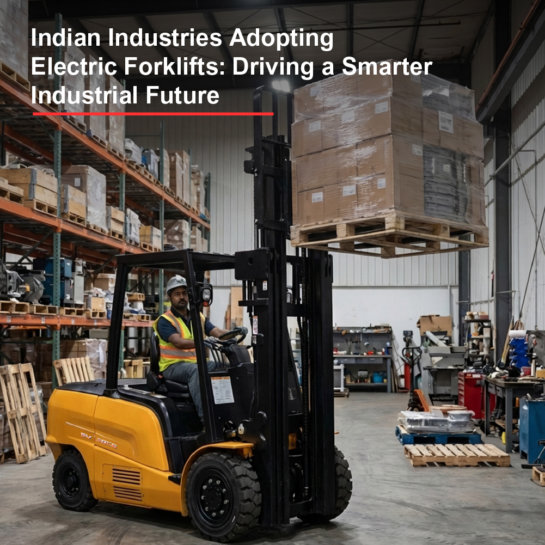
Indian Industries Adopting Electric Forklifts: Driving a Smarter Industrial Future
Scroll through the aisles of an IKEA warehouse, and every shelf, pallet, and packed carton reflects a quiet transformation: the rise of electric forklifts in India’s logistics and manufacturing ecosystem. As global retailers expand their footprint in India, the demand for faster, cleaner, and safer warehouse operations is reshaping how goods are handled, stored, and moved across the supply chain. From large manufacturing plants to modern retail distribution centres, industries are realizing that efficiency now means electric. These machines are cutting downtime, reducing costs, and improving safety all while supporting India’s broader push toward sustainable industrialization. This blog explores how electric forklifts are becoming indispensable across sectors. Why Electric Forklifts Are Becoming Essential The growing popularity of electric forklifts is a logical step for industries balancing productivity with environmental responsibility. Here’s why businesses across India are making the switch: Zero emissions: Electric forklifts eliminate harmful exhaust gases, ensuring clean air in enclosed environments such as food and pharmaceutical facilities. Lower noise levels: Quieter operation leads to safer workplaces and better communication on factory floors. Reduced maintenance costs: Fewer moving parts and no engine oil or filters mean less servicing and downtime. Automation compatibility: Their precision and IoT connectivity make them ideal for automated and smart factories. Today, many Indian forklift manufacturers are including features like autonomous navigation, telematics, and IoT-based performance tracking evidence that the electric forklift is evolving into a key part of digitally connected operations. Key Drivers of Electric Forklift Growth in India Sustainability and Environmental Goals India’s manufacturing and logistics sectors are under growing pressure to reduce emissions and adopt cleaner technologies. Government initiatives such as Make in India, Digital India, and the National Logistics Policy are driving industries to replace diesel forklifts with electric alternatives. The result is a cleaner, safer, and more efficient material-handling ecosystem that aligns with global sustainability goals. Economic Efficiency Electric forklifts offer tangible cost benefits. Their energy efficiency reduces power consumption, electricity is cheaper than diesel, and their simpler mechanics lower maintenance costs. Over time, this translates to higher uptime and lower total cost of ownership — critical advantages for industries operating on tight margins. The E-commerce and Logistics Boom The rise of online retail and digital logistics has intensified the need for quick, precise, and round-the-clock warehouse operations. Electric forklifts are the perfect fit — they charge fast, operate quietly, and move seamlessly through narrow aisles, making them ideal for…
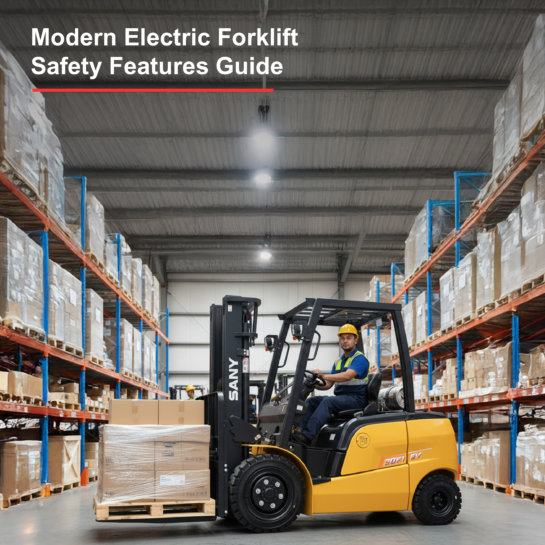
Modern Electric Forklift Safety Features Guide
Have you ever been inside a warehouse or factory where forklifts are constantly moving, picking, and stacking? These machines are essential to daily operations, speeding up material handling like nothing else. Recent years have seen a clear trend in Indian warehouses and factories: a growing share of electric forklifts are powered by lithium-ion batteries rather than traditional lead-acid ones, thanks to their efficiency and performance advantages. In fact, the Indian electric forklift market generated USD 1.95 billion in revenue in 2023, with lithium-ion forklifts representing the largest segment, and is expected to grow more by 2030 as more businesses upgrade their fleets. Why this shift? Lithium-ion batteries charge faster, last longer, and require less maintenance, making them increasingly desirable for modern warehouses. This shift is exciting—but it also comes with increased responsibility. Ensuring the safety of electric forklifts is critical to protecting workers and preventing accidents. In fact, OSHA reports that nearly 70% of forklift accidents can be prevented through proper safety measures. This blog walks you through everything you need to know about safety innovations in modern electric forklifts. Why Lithium Forklift Safety Matters The rapid adoption of lithium-ion-powered forklifts in India and worldwide can be attributed to their ability to boost warehouse productivity, lower maintenance requirements, and reduce overall operating costs. With the global lithium-ion forklift market projected to reach USD 58.7 billion by 2030, and India's own forklift battery market steadily shifting toward lithium-ion technology, warehouses are keenly aware of the efficiency gains. But these advantages come with unique safety concerns: lithium-ion batteries contain high-voltage circuits and can pose thermal risks, such as overheating or thermal runaway, if mishandled. Improper charging or unnoticed battery damage may increase the risk of electrical hazards or malfunctions. Therefore, modern lithium-ion forklifts are designed with a focus on robust safety features and require thorough operator training to address these emerging challenges. Only with the right practices and technology can warehouses fully harness the benefits of lithium-ion while protecting people and property. Safe Operating Procedures for Electric Forklifts Maintaining safety requires discipline and adherence to key practices: Charging Safety: Lithium batteries emit hydrogen during charging, which can ignite. Always charge in well-ventilated areas, keeping the battery cover open to prevent gas buildup. Forklift operators must turn off all chargers before connecting or disconnecting, to avoid sparks that could ignite gases. Regular Inspections: Check vent caps, electrical cords, and connectors for damage before…
