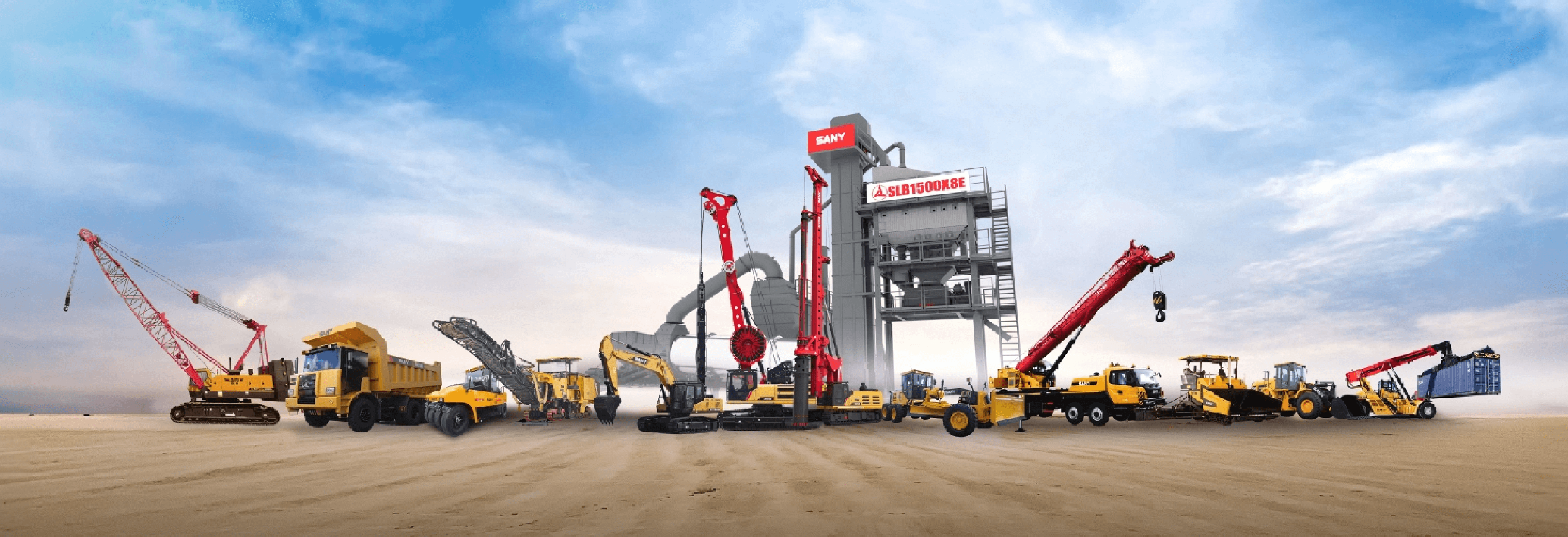
Times Now India`s Impactful Infra Leader
22 July 2024
Mr. Sanjay Saxena, COO, SANY INDIA was awarded as an Infra Leader at the India Infra Transformation Summit 2024.
Related Blog
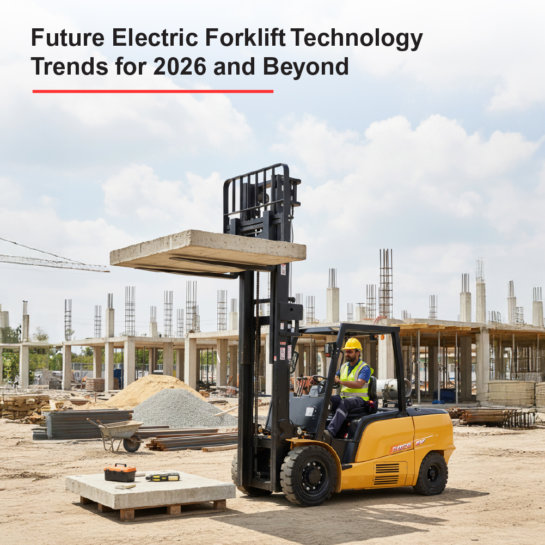
Future Electric Forklift Technology Trends for 2026 and Beyond
Electric forklifts hold over 70% of the market in many regions, with projections putting the segment above $100 billion by 2034. The shift isn't driven by regulation alone—the operational case has become harder to ignore. These aren't incremental improvements. They're changing the cost structure and uptime expectations for material handling operations. Here's a closer look at five technologies reshaping electric forklifts and what the data shows about their impact on productivity, safety, and operating costs. Battery Technology Advancements: The Power Behind the Revolution Battery technology has made real progress. Lithium-ion batteries achieved energy densities of 150-200 Wh/kg in 2024, up from 90-100 Wh/kg five years earlier. That's a significant jump that changes how forklifts operate. Today's lithium-ion batteries deliver energy efficiency up to 95% compared to lead-acid batteries' 80% efficiency. They charge in 1-2 hours, supporting 8-16 hour operational shifts. Opportunity charging lets forklifts top up during short breaks without affecting battery performance or lifespan. Lithium-ion isn't the only option anymore. Last year, manufacturers launched a pilot for electric forklift trucks equipped with sodium-ion batteries. These are designed for light-load operations and offer rapid charging, extended cycle life, and lower operational costs thanks to sodium's stable and abundant supply. Sodium-ion technology is still developing, but it presents an interesting alternative that could change cost structures across the industry. While batteries get most of the attention, hydrogen fuel cells are gaining ground. About 50,000 hydrogen forklifts operate worldwide as of 2024, mostly in the U.S. The benefits are clear: these forklifts refuel in just 2-3 minutes and produce zero emissions when using green hydrogen. Plus, you can store hydrogen on site without needing complex charging infrastructure. For operations running multiple shifts with minimal downtime, hydrogen fuel cells make sense. The technology combines the environmental benefits of electric power with the operational flexibility that internal combustion engines traditionally provided. Autonomous and Semi-Autonomous Electric Forklift Technology Trends The autonomous forklift segment is projected to grow from $2.73 billion in 2025 to $5.07 billion by 2032—a 9.3% CAGR. That kind of expansion requires substantial technological advances. Today's AGVs and AMRs can operate at heights up to 17 meters (56 feet) in very narrow aisles of just 1.8 meters (6 feet). Forklifts of the future will likely use 3D SLAM navigation combined with 3D laser adaptive sensing, providing fast project implementation and high cross-fetch repeat precision. The latest generation uses swarm intelligence, advanced systems where…
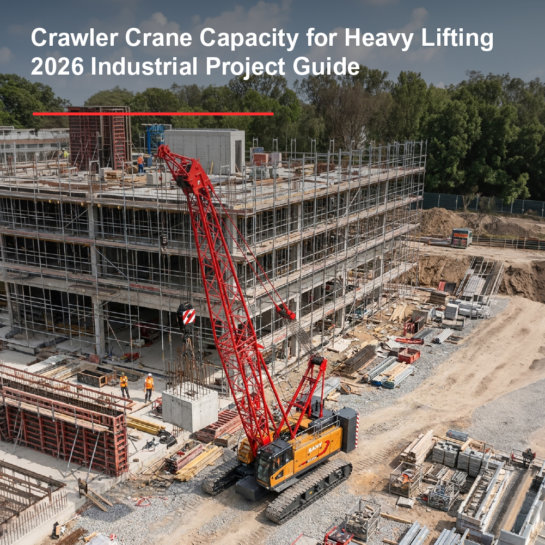
Crawler Crane Capacity for Heavy Lifting | 2026 Industrial Project Guide
In the rapidly evolving landscape of 2026 industrial projects, the demand for crawler cranes machines capable of extraordinary lifting power combined with unmatched terrain adaptability continues to climb steadily. These cranes are vital components in infrastructure, energy, and manufacturing sectors globally, facilitating the assembly of colossal structures and handling heavy loads safely and efficiently. According to a recent industry forecast, the global crawler crane market is projected to expand at a compound annual growth rate (CAGR) of about 5.7% from 2025 to 2033, underlining their growing importance in construction and industrial operations The Rising Market for Crawler Cranes The crawler crane market is witnessing robust growth driven by urbanization, infrastructure spending, and technological advancements. Valued at approximately USD 3 billion in 2024, the market is forecast to expand at a CAGR of around 5.2% through 2034, reaching new heights fueled by ongoing demand for heavy lifting equipment in mega projects and complex construction environments. Increasing investments in renewable energy, such as wind and solar power installations, alongside the need for upgrading aging infrastructure globally, continue to bolster crawler crane demand. Furthermore, Asia-Pacific, led by China and India, remains a powerhouse market for crawler cranes with rapid urbanization and industrialization. The focus on eco-friendly, fuel-efficient cranes equipped with smart technology features propels both new equipment sales and rental fleets, enhancing productivity and project safety. Crawler cranes distinguish themselves primarily through their tracked undercarriage, which spreads the machine's weight over a large surface area, vastly improving ground pressure distribution. This feature enables safe, steady movement on soft, uneven, and tricky terrain where wheeled vehicles falter. Their capability for 360-degree rotation paired with extendable multi-section lattice or telescopic booms makes them a versatile solution for heavy lifting needs in complex environments such as bridge building, offshore platforms, and high-capacity heavy manufacturing jobs. Key pain points addressed by crawler cranes include the following: Navigating challenging ground conditions while maintaining lift precision Handling heavy loads with high stability and safety Reducing downtime due to rapid assembly, disassembly, and mobility Exploring SANY’s Crawler Crane Innovations and Capabilities SANY’s crawler cranes reflect a synthesis of robust engineering, innovative control technologies, and operator-centric design, ensuring these machines meet the demands of challenging industrial projects. The standout models such as the SCS1000A and SCS1500A offer 100 and 150-ton lifting capacities respectively, with adaptable boom lengths reaching up to 76 meters with various jib combinations, offering wide operational ranges to…
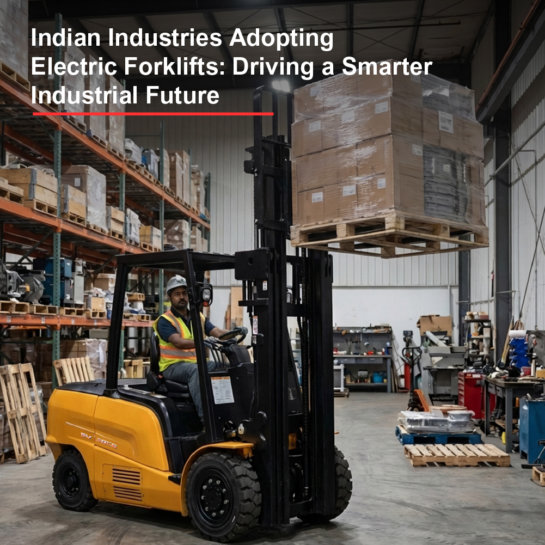
Indian Industries Adopting Electric Forklifts: Driving a Smarter Industrial Future
Scroll through the aisles of an IKEA warehouse, and every shelf, pallet, and packed carton reflects a quiet transformation: the rise of electric forklifts in India’s logistics and manufacturing ecosystem. As global retailers expand their footprint in India, the demand for faster, cleaner, and safer warehouse operations is reshaping how goods are handled, stored, and moved across the supply chain. From large manufacturing plants to modern retail distribution centres, industries are realizing that efficiency now means electric. These machines are cutting downtime, reducing costs, and improving safety all while supporting India’s broader push toward sustainable industrialization. This blog explores how electric forklifts are becoming indispensable across sectors. Why Electric Forklifts Are Becoming Essential The growing popularity of electric forklifts is a logical step for industries balancing productivity with environmental responsibility. Here’s why businesses across India are making the switch: Zero emissions: Electric forklifts eliminate harmful exhaust gases, ensuring clean air in enclosed environments such as food and pharmaceutical facilities. Lower noise levels: Quieter operation leads to safer workplaces and better communication on factory floors. Reduced maintenance costs: Fewer moving parts and no engine oil or filters mean less servicing and downtime. Automation compatibility: Their precision and IoT connectivity make them ideal for automated and smart factories. Today, many Indian forklift manufacturers are including features like autonomous navigation, telematics, and IoT-based performance tracking evidence that the electric forklift is evolving into a key part of digitally connected operations. Key Drivers of Electric Forklift Growth in India Sustainability and Environmental Goals India’s manufacturing and logistics sectors are under growing pressure to reduce emissions and adopt cleaner technologies. Government initiatives such as Make in India, Digital India, and the National Logistics Policy are driving industries to replace diesel forklifts with electric alternatives. The result is a cleaner, safer, and more efficient material-handling ecosystem that aligns with global sustainability goals. Economic Efficiency Electric forklifts offer tangible cost benefits. Their energy efficiency reduces power consumption, electricity is cheaper than diesel, and their simpler mechanics lower maintenance costs. Over time, this translates to higher uptime and lower total cost of ownership — critical advantages for industries operating on tight margins. The E-commerce and Logistics Boom The rise of online retail and digital logistics has intensified the need for quick, precise, and round-the-clock warehouse operations. Electric forklifts are the perfect fit — they charge fast, operate quietly, and move seamlessly through narrow aisles, making them ideal for…
