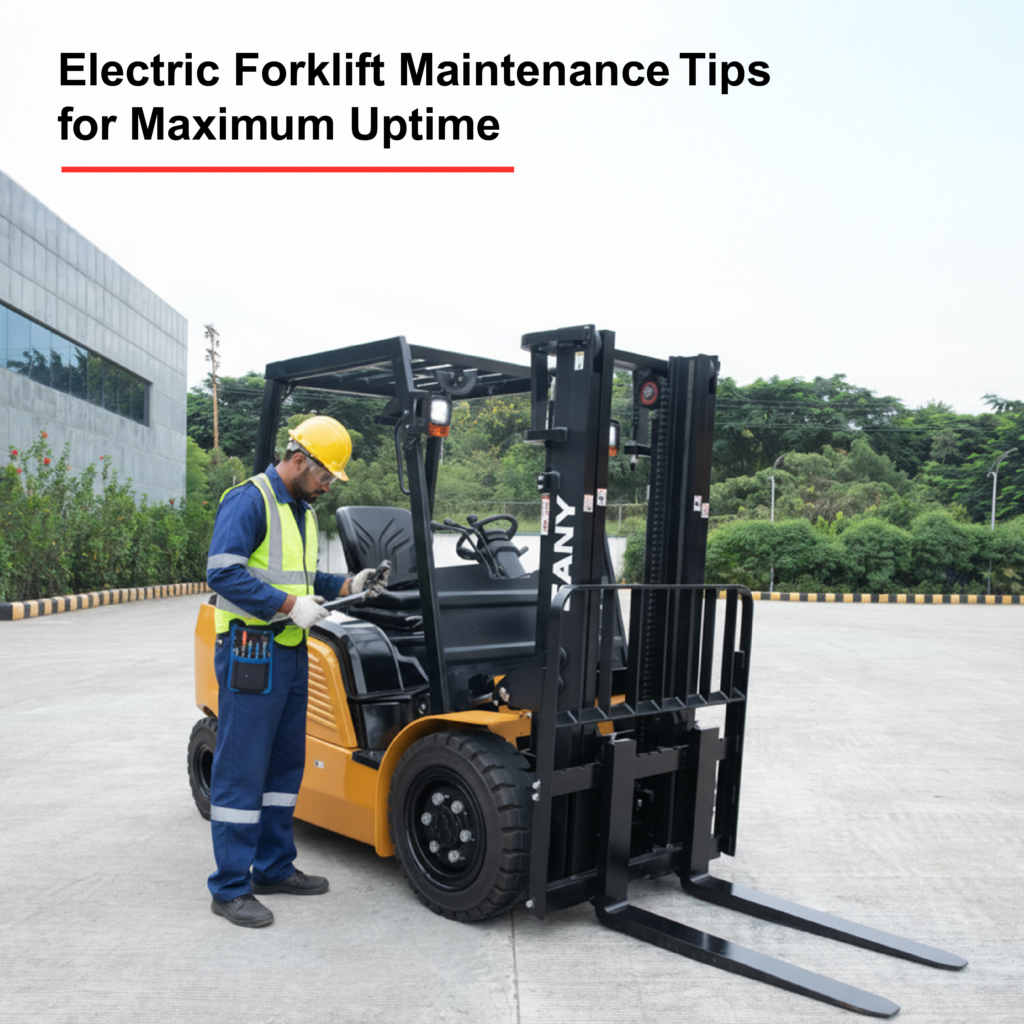
Electric Forklift Maintenance Tips for Maximum Uptime
Category: Forklift, Material Handling | 05 February 2026
Letting routine forklift checks slide might seem harmless today—but all it takes is a missed battery top-up, a clogged filter, or a loose cable for operations to grind to a costly halt. When a forklift breaks down mid-shift, urgent repairs compete with scheduled work, drivers sit idle, and delayed shipments can trigger penalties or unhappy clients. What’s worse, these breakdowns tend to snowball: a minor fix left unattended becomes a major, expensive problem down the line, pushing up your maintenance spend months later.
For India’s fast-growing logistics sector, this isn’t a small risk. The electric forklift market here is projected to hit USD 5.9 billion by 2030—so downtime doesn’t just affect one team but entire supply chains that depend on smooth, sustainable operations. If you want your fleet to keep moving while costs stay low, regular and climate-specific care is critical. This guide outlines how to make that happen, step by step, for Indian conditions—and how SANY’s technology gives you an edge from day one.
Why Electric Forklift Maintenance Matters in India
India’s climatic diversity presents one of the most challenging maintenance environments in the world. From dry northern interiors to humid coastal zones, forklifts are constantly exposed to elements that test their endurance.
Here’s how local conditions impact forklift longevity and why routine care is crucial:
- Dust infiltration: Fine dust particles can clog ventilation systems, reducing cooling efficiency and increasing the risk of overheating or electrical faults.
- High temperatures: Indian summers can cause batteries to overheat, accelerating chemical degradation and shortening service life.
- Humidity and corrosion: In coastal regions, salty air and moisture corrode electrical connectors and metal parts.
- Training and service gaps: Many operators lack formal training in preventive care, resulting in unintentional battery neglect or unsafe handling.
Ignoring these conditions can lead to reduced performance, unplanned downtime, and higher maintenance costs. A structured plan centred on battery maintenance, routine inspection, and operator awareness is key to keeping forklifts reliable year-round.
1. Prioritize Battery Maintenance for Peak Performance
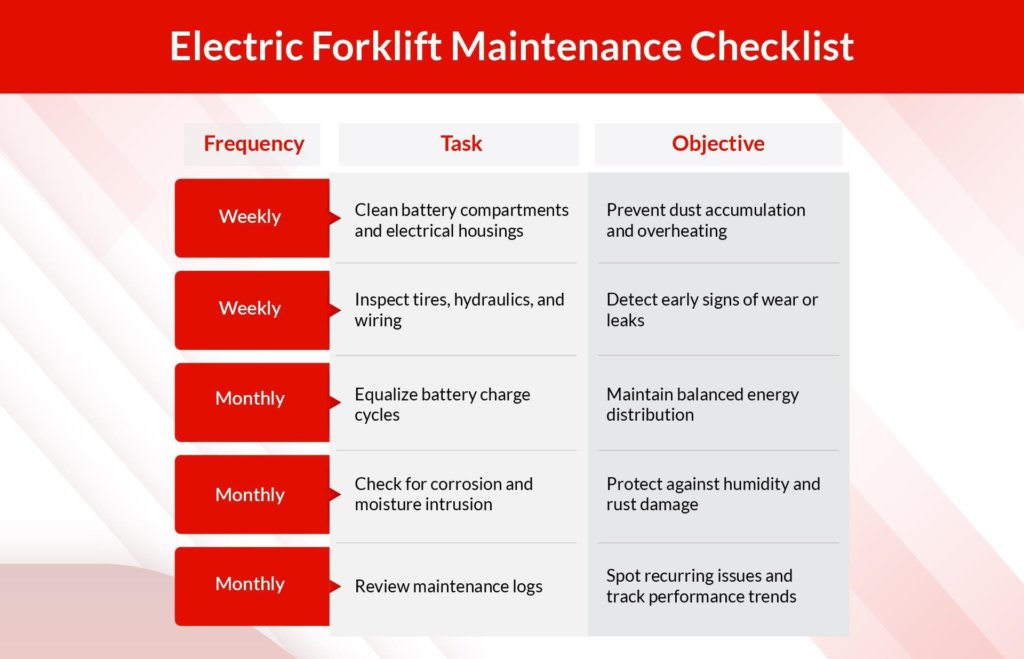
The battery is the heart of every electric forklift—and the most expensive part to replace. Proper battery maintenance directly determines uptime and efficiency. Daily and weekly best practices include inspecting electrolyte levels and topping up only with distilled water, wiping battery terminals regularly to prevent corrosion buildup, and avoiding deep discharges by recharging when capacity reaches 20% rather than running to zero. It is also important to allow sufficient cooling after charging before resuming operations and to equalize charge cycles monthly to keep cells balanced and extend battery life.
Smart tip: Lithium-ion batteries are emerging as a cost-efficient alternative. They need no watering, charge up to 40% faster, and are 40% more energy-efficient than lead-acid versions—helping overcome many maintenance challenges in India’s hot climate.
2. Keep It Clean: Routine Forklift Cleaning and Inspection
Dust and grime are among the biggest silent culprits behind equipment failures in India. Regular cleaning helps prevent buildup that traps heat and damages sensitive components.
- Clean battery compartments, motor housings, and electrical enclosures at least weekly.
- Inspect hydraulic hoses, connectors, and fittings for cracks or leaks.
- Check tyre tread and pressure—under-inflated tyres reduce stability and increase power draw.
- Examine all seals and gaskets after operations in humid or dusty areas to prevent moisture ingress.
A clean forklift not only operates more efficiently but also makes it easier to spot early signs of wear or damage.
3. Establish a Safe and Efficient Charging Zone
Improper charging setups are a common cause of premature battery degradation. To prevent heat buildup and safety hazards, it is crucial to set up a compliant and climate-appropriate charging station. Choose a shaded, well-ventilated area that allows hydrogen gas to disperse safely during charging. Install clear signage such as "No Smoking," "No Flames," and "Authorized Personnel." Only to ensure safety protocols are followed. Regularly inspect charging plugs and cables for any loose or sparking connections to prevent electrical hazards. Keep fire extinguishers and eyewash stations nearby as precautionary measures. Additionally, train operators are trained on proper plug-in and unplugging sequences to avoid short circuits. Creating and maintaining a safe charging environment not only extends battery life but also ensures safer operations across shifts.
4. Operator Training and Preventive Maintenance Scheduling
Even the most advanced forklifts rely on the people who use them. Operator awareness directly impacts equipment longevity.
- Conduct regular training sessions on safe handling and daily inspection routines.
- Implement digital maintenance logs to record every inspection and service.
- Move from reactive to proactive care—schedule maintenance before problems occur.
- Collaborate with certified service providers for quarterly professional inspections.
This approach ensures small issues are addressed before they become downtime-causing repairs.
SANY Electric Forklifts: Engineered for India’s Harsh Environments
Not all forklifts are built to withstand India’s operating realities. SANY Electric Forklifts, such as the SANY SCP30 (3T) and SANY SCP50 (5T), are specifically designed for India’s heat, dust, and humidity—offering rugged performance with simplified maintenance.
They feature IP67-rated electrical components and IPX4 for Foklifts protection systems that shield critical circuits from dust, moisture, and humidity. An electric water-cooling system keeps performance steady even in 45°C heat, while fast-charging batteries reach 90% capacity in just 1.5 hours for over seven hours of continuous operation. Spark-free battery plugs ensure safe, stable energy transfer, and cloud-based fleet monitoring enables real-time diagnostics. Added to this are advanced safety systems that detect human presence and driver fatigue to minimize risks.
For managers seeking durable, low-maintenance equipment, SANY forklifts combine robust engineering and smart technology to keep operations efficient, safe, and dependable across India’s toughest environments.
6. Long-Term Maintenance Strategy for Maximum Uptime
Long-term reliability requires discipline and documentation. Here’s how to extend your forklift’s lifespan:
- Schedule biannual professional inspections to assess electrical, hydraulic, and cooling systems
- Record every maintenance task to identify recurring issues and track trends.
- Follow manufacturer-specific battery maintenance recommendations for charging cycles, watering frequency, and temperature control.
- Use genuine spare parts from authorized providers to ensure performance consistency.
A Holistic Maintenance Approach for Maximum Uptime
Effective electric forklift maintenance goes beyond ticking boxes—it builds reliability into your operations. By addressing India’s dust, heat, and humidity challenges through structured care routines, skilled operators, and advanced technology, you can unlock maximum uptime and longer equipment life.
Paired with innovations like SANY’s SCP30 and SCP50 forklifts, explicitly designed for Indian conditions, your warehouse can achieve higher productivity, lower operating costs, and safer workplaces.
Ready to boost uptime and reduce downtime across your warehouse or logistics fleet? Contact SANY today for a consultation, equipment demonstration, and tailored maintenance program—designed for India’s unique conditions.
Related Blog
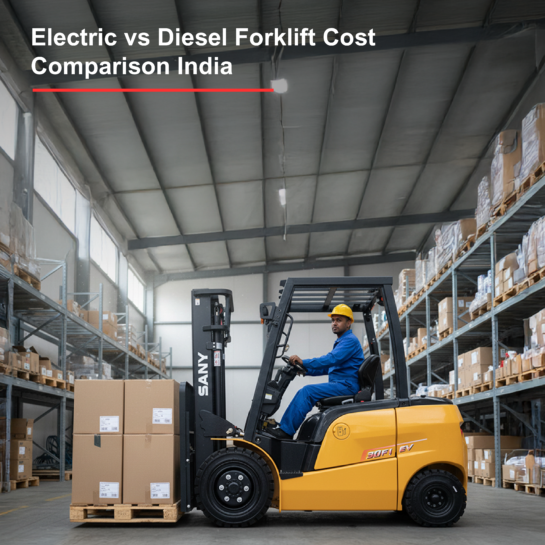
Electric vs Diesel Forklift Cost Comparison India
The Changing Warehouse Scene Think back to when every warehouse relied on diesel forklifts. They were tough, worked long hours, and could handle any load. But they were also noisy, emitted a lot of smoke, and cost more to run each year. Today, things are changing. Lithium-ion electric forklifts glide quietly through modern factories and distribution centres. And the numbers speak loudly—by 2030, experts say, about one in four forklifts in India will be powered by lithium batteries. This isn’t just about going green—it’s about adopting future forklift technology and making smarter choices for businesses. The Real Benefits of Electric Forklifts Electric forklifts aren’t just quieter—they’re safer and easier to manage. They come with smart sensors that help prevent accidents and keep drivers alert, which really matters since 70% of forklift mishaps can be avoided with a little more tech and awareness. Electricity also beats diesel on air quality: no fumes, no exhaust. IP67-rated components keep electric forklifts working well regardless of dust or heavy rain. Running and fixing diesel forklifts can get expensive; there’s constant engine servicing and oil changes. Lithium-ion batteries also recharge quickly, so there’s less downtime between shifts. And all this drives home the point—material handling innovation is finally making warehouses safer and more efficient. Cost Comparison and Total Cost of Ownership Electric forklifts cost more upfront—about 30% higher than diesel (₹10–15 lakh vs ₹7–12 lakh). But the numbers quickly turn in their favour once you account for running and maintenance costs. Fuel and Energy: Diesel forklifts consume around 2–3 litres diesel per hour, and at ₹93–95 per litre, that adds up fast—nearly ₹200–₹285 every hour of operation. Electric forklifts, on the other hand, draw about 7–9 units of power per hour, costing just ₹60–₹130 at an average of ₹7.5 per kWh. That’s over 50% lower energy cost for every hour of use. Maintenance: Electric forklifts have fewer moving parts—no engine oil, filters, or exhaust systems to service. This not only cuts workshop visits but also minimizes downtime, which translates into steady productivity. Battery Lifespan and ROI: Lithium-ion batteries typically last 5–7 years, nearly twice as long as traditional lead-acid ones. Combined with reduced servicing, most warehouses recover their investment in just 2–3 years, compared to 4–5 years for diesel. In short, while diesel forklifts may seem cheaper to buy, electric ones consistently outperform them in total cost of ownership, paying back the extra upfront cost…
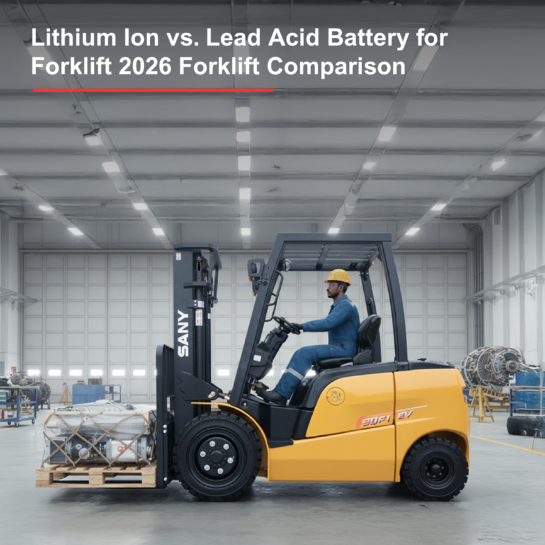
Lithium-Ion vs. Lead-Acid Battery for Forklift | 2026 Forklift Comparison
Who would have thought that the low-cost, dependable lead-acid battery, powering forklifts for decades in Indian warehouses and factories, would face such tough competition from lithium-ion technology as we enter 2026? Lead-acid battery forklifts have long been the industry standard thanks to their affordability and reliable performance. However, with advances in forklift battery technology, lithium-ion battery forklifts are rapidly transforming material handling across India, offering faster charging, higher energy efficiency, and significantly reduced maintenance. This comprehensive comparison takes a deep dive into key differences, real statistics, and climate considerations shaping the future of forklift batteries. Understanding Battery Forklift Technologies: Lead-Acid vs. Lithium-Ion Lead-acid forklift batteries generate power through a chemical reaction between lead plates and sulfuric acid. While dependable, they’re heavy and require regular maintenance such as watering and cleaning. Their long charging cycles—typically six to eight hours plus a cooling period—limit flexibility and increase downtime in multi-shift warehouse operations. Lithium-ion batteries mark a major leap in efficiency and performance. They can utilize about 70% of their total capacity, while lead-acid batteries use only around 45%, making lithium-ion models roughly 55% more efficient. They also generate only half as much heat, ensuring safer, cooler, and more stable performance even during intensive operations. Modern lithium-ion batteries used in forklifts employ lithium iron phosphate (LFP) technology, which enables rapid charging—typically in about 1.5 hours—and supports opportunity charging, allowing operators to top up the battery during short breaks without affecting its lifespan. This flexibility minimizes downtime and extends forklift operating hours, improving productivity on the warehouse floor. Beyond performance, lithium-ion batteries offer long-term cost and maintenance advantages. Lead-acid batteries require constant upkeep—watering, terminal cleaning, and electrolyte checks—while lithium-ion options are virtually maintenance-free and deliver over 3,000 charge cycles, compared to the 1,000–1,500 typical of lead-acid models. Their faster charging also reduces operational costs, with electricity consumption 50–70% lower per hour than forklifts powered by propane, diesel, or gasoline. With advanced thermal management, lithium-ion batteries perform consistently in India’s varied weather—from extreme heat to coastal humidity—while remaining efficient across temperatures from –20°C to 60°C. SANY SCP50 and SCP30: Lithium-Ion Forklifts Made for India SANY’s lithium-ion forklifts lead the way with cutting-edge battery forklift technology designed for Indian warehouses. The SANY SCP50 is a 5,000 kg capacity forklift powered by an IP67-protected 336V 50kWh lithium battery that charges fully in just 1.5 hours. This model handles dusty warehouses and monsoon moisture with ease. Complementing the…
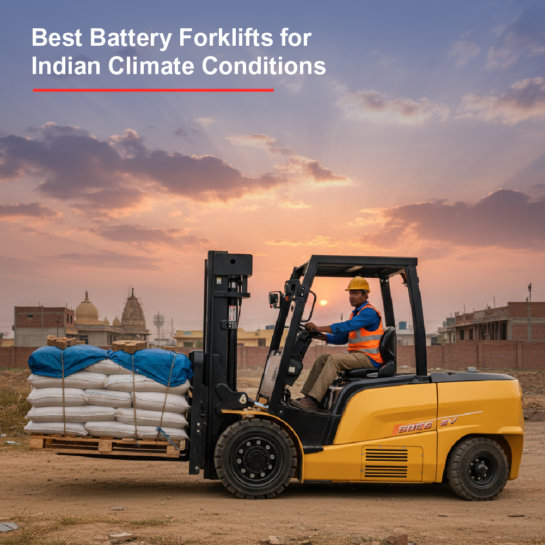
Best Battery Forklifts for Indian Climate Conditions
India’s Diverse Climate and Impact on Forklift Performance India's vast and diverse geography results in multiple climate zones, each presenting unique challenges to industrial operations. Coastal areas like Tamil Nadu and Kerala experience high humidity and salt-laden air, which can accelerate corrosion of forklift battery terminals and connectors. Northern regions, including Punjab and Himachal, experience cold winters, during which sub-zero temperatures reduce battery efficiency and lifting capacity. Desert zones such as Rajasthan endure scorching temperatures often exceeding 45°C, which accelerate battery degradation, particularly in traditional lead-acid designs. Monsoon seasons add moisture complexities requiring waterproof battery housings and elevated charging stations. The As businesses across sectors adapt to these regional challenges, the demand for reliable, all-weather electric forklifts continues to rise. According to market projections, the electric forklift market in India is expected to reach a revenue of US$5,936.4 million by 2030, underscoring the growing shift toward battery-powered models designed to perform efficiently across India’s varied climate conditions. Climate Considerations for Battery Forklifts Battery forklifts deployed across India's regions face these environmental factors: Coastal areas contend with corrosion risks due to constant humidity. Northern cold reduces battery discharge rates and torque. Desert heat accelerates water loss in lead-acid batteries and causes thermal stress. Monsoon rain demands rugged waterproofing and well-drained charging areas. Such environmental stressors directly impact voltage stability, battery lifespan, and maintenance frequency, influencing forklift performance in extreme weather outcomes. Lead-Acid vs. Lithium-Ion Batteries: Which Suits Indian Conditions? Lead-acid batteries have traditionally powered forklifts due to their low initial costs and proven track records, but they present several operational challenges in India's climate. They require constant water replenishment to counter electrolyte evaporation in hot conditions and emit hazardous fumes during charging. These fumes necessitate large, ventilated charging rooms, increasing facility overheads. For multi-shift operations, spare batteries and battery storage areas further raise costs. Performance sharply decreases in cold weather, with up to 35% capacity loss and severe performance degradation. Lithium-ion (LFP) batteries address these head-on with sealed designs eliminating watering and fume issues, allowing charging in non-ventilated rooms. LFP batteries operate effectively up to 50°C, provide consistent voltage and lifting torque across charge levels, and support rapid charging cycles—typically 1 to 2 hours. This supports opportunity charging during break periods and reduces downtime. The reduced internal resistance produces half the heat compared to lead-acid counterparts, enhancing safety and performance. In fact, lithium-ion technology is approximately 55% more efficient than lead-acid,…
