AWP for Warehouse Operations: Efficiency and Safety
Category: Aerial Work Platform | 12 August 2026
TL;DR
- Warehouse scissor lifts reduce stock picking time by up to 30-40% while improving worker safety
- Electric indoor warehouse lifts offer zero emissions and compact operation ideal for Indian warehouse environments
- Modern warehouse access equipment features guardrails, emergency lowering, and overload protection for maximum safety
Introduction
Managing a warehouse in India's Tier 2 and Tier 3 cities comes with unique challenges. Limited space, tight budgets, and growing inventory demands can strain operations. How do you safely access high shelves while maintaining efficiency? The answer lies in warehouse scissor lifts—specialized AWP equipment designed to transform how your team handles stock picking, maintenance, and inventory management.
A warehouse scissor is a strategic investment that addresses two critical concerns: operational efficiency and worker safety. This article explores why indoor warehouse lifts have become essential for modern warehouses, what makes them effective, and how the right warehouse access equipment can reshape your operations.
What Is a Warehouse Scissor Lift and How Does It Improve Operations?
A warehouse scissor lift is a mobile platform that extends vertically using a crisscross mechanism. Unlike ladders or manual access methods, these machines provide stable, spacious platforms where workers can safely operate at heights ranging from 5.6 meters to over 13 meters.
For warehouses in smaller Indian cities, space efficiency matters. Models like the Sany SPS0808HA offer an 8-meter platform height with a compact footprint, perfect for navigating narrow aisles. The electric operation means zero emissions, crucial for indoor environments where ventilation may be limited.
The productivity gains are measurable. Studies show that AWP for stock picking can reduce task completion time by 30-40% compared to traditional methods. Workers spend less time climbing and more time working, which translates directly to improved throughput.
Why Should Warehouses Use AWP for Stock Picking?
Stock picking demands speed and accuracy. Traditional methods like ladders force workers to climb repeatedly, carry items awkwardly, and waste valuable time. AWP for stock picking eliminates these inefficiencies.
Here's what makes them effective:
- Stable work platform: Workers can use both hands freely, improving picking accuracy
- Adjustable height: Quick positioning at any shelf level without climbing
- Safety features: Guardrails and emergency lowering systems protect operators
- Mobility: Self-propelled models move easily between aisles
The Sany SPS1012HA, with its 10-meter platform height and 350 kg lifting capacity, can accommodate two operators plus materials, making bulk picking operations significantly faster.
What Are the Advantages of Indoor Warehouse Lifts Over Other Access Methods?
Indoor warehouse lifts offer distinct advantages that ladders, scaffolding, or forklifts simply can't match.
Safety first: Electric scissor lifts include tilt sensors, overload protection, and emergency descent controls. These features are standard on quality equipment like Sany's range.
Operational efficiency: No assembly required. Drive to location, raise platform, start working. That simplicity saves hours weekly.
Environmental considerations: Electric models produce zero emissions, maintaining indoor air quality, a critical factor for warehouses storing sensitive goods or operating in enclosed spaces.
Cost effectiveness: Lower maintenance costs compared to diesel alternatives, with quieter operation that won't disturb neighboring operations.
Comparison: Sany Warehouse Scissor Lift Models
| Model | Platform Height | Lifting Capacity | Ideal Use Case |
| SPS0808HA | 8 meters | 250 kg | Small warehouses, narrow aisles, single-operator tasks |
| SPS1012HA | 10 meters | 350 kg | Medium warehouses, bulk picking, two-operator work |
| SPS1414HA | 13.8 meters | 350 kg | Large facilities, high-rack storage, maintenance work |
How Does Warehouse Access Equipment Enhance Safety and Productivity?
Modern warehouse access equipment transforms safety from a compliance checkbox into a competitive advantage. When workers feel secure, they work confidently and efficiently.
Key safety features include:
- Platform guardrails preventing falls
- Emergency lowering systems for power failures
- Tilt sensors that prevent operation on unstable surfaces
- Overload protection preventing platform overstress
But safety isn't separate from productivity—it enables it. Reduced workplace accidents mean fewer disruptions, lower insurance costs, and better employee morale. The investment in quality warehouse access equipment pays dividends through reduced downtime and improved operational consistency.
Conclusion
For warehouse owners in India's Tier 2 and Tier 3 cities, warehouse scissor lifts represent more than equipment, they're strategic tools for balancing efficiency with safety. The right indoor warehouse lifts reduce operational costs, improve worker safety, and increase throughput simultaneously.
Whether you're managing a 5,000-square-foot facility or expanding to multiple locations, investing in quality warehouse access equipment positions your operation for sustainable growth. The question isn't whether you can afford AWP for stock picking—it's whether you can afford to operate without it.
Ready to enhance your warehouse operations? Explore Sany's range of electric scissor lifts designed specifically for Indian warehouse environments at https://www.sany.in/aerial-work-platform/ and discover solutions that match your operational needs.
Frequently Asked Questions
What certifications are required to operate a warehouse scissor lift?
Operators need training on equipment controls, safety protocols, and emergency procedures. While specific certification requirements vary by state in India, comprehensive operator training covering pre-operation inspection, safe operation, and hazard recognition is essential.
How safe are indoor warehouse lifts?
When properly maintained and operated according to manufacturer guidelines, indoor warehouse lifts are among the safest access methods available. Modern electric models include multiple safety systems—tilt protection, overload sensors, emergency descent, and guardrails—that significantly reduce accident risk compared to ladders or scaffolding.
What maintenance is needed for warehouse access equipment?
Regular maintenance includes daily pre-operation inspections, weekly checks of hydraulic systems and electrical components, monthly tire and battery assessments, and annual comprehensive inspections by certified technicians. Well-maintained equipment typically delivers 10,000-15,000 operating hours before major component replacement.
Can AWPs improve productivity in warehouse operations?
Absolutely. Research indicates productivity improvements of 30-40% for stock picking operations when switching from traditional access methods to AWP equipment. The combination of stable platforms, quick positioning, and enhanced safety allows workers to focus on tasks rather than access logistics.
Related Blog
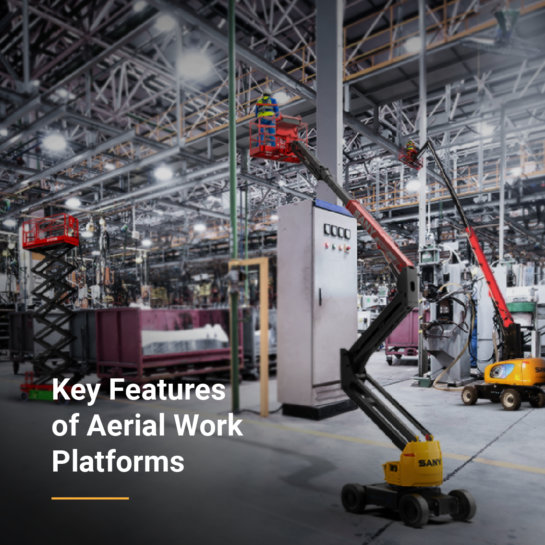
Key Features of Aerial Work Platforms
Working at heights doesn’t have to be a balancing act. Whether you’re navigating a construction site, repairing hard-to-reach areas, or organising a busy warehouse, Aerial Work Platforms (AWPs) are the ultimate game-changer. These innovative machines combine safety and efficiency, making elevated tasks not only easier but also far less risky. In this blog, we’ll explore the key features of AWPs and explain how these versatile machines make working at heights safer, more efficient, and adaptable to various environments. What Are Aerial Work Platforms (AWPs)? Aerial Work Platform (AWP) is a machine designed to lift workers and equipment safely to high places. Also known as aerial work platforms, they are commonly used in industries like: Construction Maintenance Warehousing Utilities Airports Cement Plants Steel Plant Metro Bridges AWPs are used to make tasks at heights, like repairs, installations, or inspections, much easier and safer than traditional methods like ladders or scaffolding. They come in different designs to meet various needs, depending on the job. Types of Aerial Work Platforms Scissor Lifts How they work: A scissor mechanism lifts the platform straight up. Ideal for: Jobs that require a stable, spacious platform at heights, such as electrical work, painting, or warehouse stock picking. Best for: Applications where you need a large working area, such as facility maintenance and construction sites. Lifting capacity: 500–1500 kg Telescopic Boom Lifts How they work: The boom extends straight out to great heights, giving you access to tough-to-reach places. Ideal for: Jobs that need high, straight access with minimal horizontal movement. Best for Outdoor tasks, such as building maintenance, construction work, or any job requiring a direct and high vertical reach. Lifting capacity: 230–450 kg Articulating Boom Lifts How they work: These lifts have joints that allow the platform to move over and around obstacles, providing more flexibility. Ideal for: Jobs that require precise movement and access around obstacles. Best for: Applications like power line maintenance, airports, Metro bridges, industrial applications or jobs requiring flexibility over and around barriers. Lifting capacity: 200–350 kg Key Features of Aerial Work Platforms Designed to simplify challenging tasks at heights, AWPs come equipped with cutting-edge features that prioritize both safety and functionality. Superior Lifting Capacities AWPs come in various lifting capacities to carry more weight, including workers, tools, and heavy equipment. For example, scissor lifts can handle heavier loads, making them great for carrying equipment, while boom lifts provide the necessary reach…
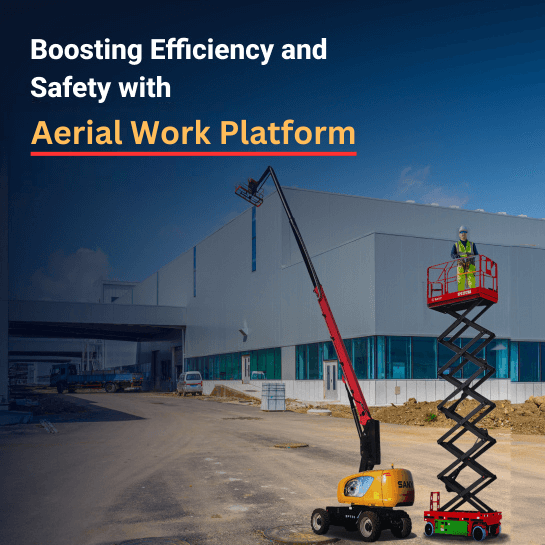
Boosting Efficiency and Safety with aerial work platforms
Elevated workspaces often bring challenges such as inefficiency, safety risks, and high costs when relying on traditional tools like ladders and scaffolding. These limitations can slow down progress and increase operational hazards. AWPs address these issues with solutions that enhance efficiency, improve safety, and reduce operational costs. In this blog, we will explore how Aerial Work Platform are transforming industries and optimising operations. Understanding Aerial Work Platforms An Aerial Work Platform (AWP) is a mechanical device designed to provide temporary access to high or hard-to-reach areas. AWPs come in various forms, each tailored to specific applications: Scissor Lifts: Known for their vertical lifting mechanism, scissor lifts are ideal for tasks that require workers to move straight up and down. They are often used in warehouses, maintenance tasks, and installations where stability is paramount. Articulating Boom Lifts: These lifts have jointed arms that allow vertical as well as horizontal reach, making them perfect for navigating obstacles in confined spaces. Common applications include construction sites and utility maintenance. Telescopic Boom Lifts: Also called straight booms, these boom lifts extend in a straight line, providing maximum reach and height. They are typically used in high-rise construction projects, building maintenance, and heavy equipment servicing. AWP Benefits Aerial Work Platform are redefining how industries operate in elevated workspaces. These innovative tools offer a range of advantages that are game-changing. 1. Efficiency at Its Best Aerial Work Platform are designed to optimise productivity by enabling workers to access elevated areas quickly and safely. Unlike traditional ladders or scaffolding, which require extensive time for setup and repositioning, Aerial Work Platform can be deployed with ease and adjusted swiftly during operations. Their superior manoeuvrability ensures that workers can focus on their tasks rather than wasting time navigating large and heavy equipment. For example, articulating boom lifts allow operators to reach areas around obstacles, while scissor lifts are perfect for vertical tasks in confined spaces like warehouses. By incorporating Aerial Work Platform, businesses can achieve more in less time, leading to faster project completions and cost savings. 2. Enhancing Worker Safety Safety is a cornerstone of any industrial operation, especially when working at heights. Aerial Work Platform provide a secure and stable platform for workers, equipped with features such as: Guardrails to prevent falls. Fall protection systems to secure workers in place. Stable platforms that reduce the risk of instability. Overload protection Angle sensor These features minimise workplace injuries and ensure…
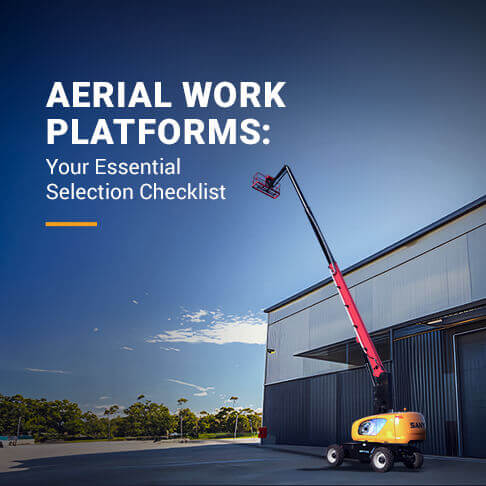
Aerial Work Platforms: Your Essential Selection Checklist
Are you looking for a reliable machine to safely lift workers to perform tasks like repairing overhead electrical wires? For these types of jobs, you require a specialized solution—Aerial Work Platforms. Whether it's for construction, maintenance, or repairs, Aerial Work Platforms (AWPs) are essential tools to ensure safety, increase productivity, and handle tasks at various heights. But with so many options available, how do you know which AWP is the right fit for your project? Let’s dive into this comprehensive guide to help you choose the perfect Aerial Work Platform. What is an Aerial Work Platform? An Aerial Work Platform (AWP) also known as an Elevated Work Platform (EWP) is a mechanical device used to provide temporary access to workers at elevated heights. These platforms are typically equipped with safety features such as guardrails and fall protection systems, allowing workers to safely perform tasks in elevated positions. AWPs are widely used in industries such as construction, maintenance, and warehousing. What are the Major Types of Aerial Work Platforms and Their Applications? When it comes to aerial work platforms, selecting the right one depends on the type of task and the work environment. Below are the major types of aerial lift platforms and their common applications: Telescopic Lifts: Telescopic lifts, also known as straight or stick booms, are perfect for tasks that require extended reach at a fixed height. These are ideal for jobs like tree trimming, construction, and steelwork installations, where a worker needs to access hard-to-reach areas. Boom Lifts: Boom lifts provide more flexibility than telescopic lifts, with extendable arms that can move horizontally and vertically. They are best suited for jobs that require versatile movement, such as electrical maintenance or window cleaning at varying heights and angles. Spider Lifts: Known for their lightweight design and compact structure, spider lifts are perfect for navigating narrow and confined spaces. These lifts are often used in tasks requiring access to difficult areas such as indoor maintenance or confined outdoor spaces. Scissor Lifts: Scissor lifts offer a stable, vertical lifting motion. With a large platform, they are ideal for jobs requiring access to large surface areas at heights, such as painting, roofing, or ceiling installations. Vertical Personnel Lifts: These lifts are lightweight and designed for one person. They are used primarily for indoor jobs like changing light bulbs or performing repairs in warehouses or offices. Articulated Lifts Also known as knuckle booms,…
