Urban Road Construction Equipment: Choosing the Right Package for City Projects
Category: Road Machinery | 12 August 2026
TL;DR
- Urban road projects demand compact, maneuverable equipment unlike highway construction—space constraints and traffic management are critical
- The right equipment package combines compact excavators, wheel loaders, motor graders, rollers, and asphalt equipment sized for narrow streets
- Success depends on balancing productivity with minimal disruption to residents, businesses, and existing utility infrastructure
Building roads in Tier 2 and Tier 3 Indian cities presents challenges that highway contractors rarely face. You're working in congested neighborhoods where a single lane closure affects thousands of daily commuters. Underground utilities crisscross every meter. Residents and shopkeepers watch your every move. Choosing the right urban road construction equipment isn't just about productivity—it's about fitting powerful machinery into impossibly tight spaces while keeping the city moving.
Municipal project owners and contractors quickly learn that equipment packages designed for open highway projects don't translate well to urban environments. The difference between project success and costly delays often comes down to selecting city road building machinery that can navigate narrow streets, minimize noise, and work around existing infrastructure without compromise.
Why Equipment Selection Differs for Urban Road Projects
Urban road construction operates under constraints that don't exist on highway projects. A 20-ton excavator that's perfect for clearing large stretches of rural highway becomes a liability when you're working on a 10-meter-wide street flanked by shops and apartment buildings. Traffic can't be diverted for weeks—you need equipment that can complete work in shorter windows, often at night.
Then there's the utility maze. Every dig risks hitting water mains, electrical lines, or fiber optic cables. Equipment for narrow urban roads must offer precision and control that larger machines simply can't provide. Visibility matters more when pedestrians are constantly nearby. Noise restrictions mean you can't always run diesel-powered machinery during peak hours.
The reality is that municipal road construction gear needs to balance conflicting demands: powerful enough to maintain productivity, compact enough to maneuver in tight quarters, and sophisticated enough to work safely in dense urban environments.
The Right Urban Road Construction Equipment Package
Start with compact excavators in the 1.8 to 9-ton range. These machines deliver the digging power you need while fitting into spaces where standard excavators can't operate. Their zero-tail-swing design lets you work alongside buildings without worrying about the counterweight clipping parked vehicles or storefronts.
Wheel loaders or skid steers handle material efficiently in confined areas. Unlike larger loaders, they can navigate narrow access points and turn within the width of a single lane. This agility matters when you're shuttling material from stockpiles to placement points with limited maneuvering room.
For precision leveling, motor graders like the STG140C-10 or STG170C-10 offer blade widths (3660mm) suitable for urban roads without the massive footprint of highway-class graders. Their 150-180 HP engines provide sufficient power while maintaining fuel efficiency critical for budget-conscious municipal projects.
Rollers and compactors need variety in urban settings. Single-drum models like the STR90C-10 PRO (9200 kg operating weight) work well for initial compaction, while tandem rollers such as the SSR110C-10 PRO handle finish work on narrower sections. For larger arterial roads, pneumatic tire rollers like the SPR260C-10 PRO deliver superior compaction with adjustable tire pressure—essential when dealing with varying soil conditions across a city project.
Asphalt equipment must match the scale. Compact pavers like the SAP80C-10 (700 t/h capacity) or SAP100C-10 (900 t/h capacity) can lay high-quality surfaces on roads 6-8 meters wide without the setup complexity of highway pavers. Pair these with appropriately sized batching plants—SABP145 or SABP180 models offer 145-180 TPH capacity with improved fuel efficiency, perfect for sustained urban work.
Key Factors Before Choosing Equipment
Traffic and pedestrian management drives everything. Equipment that can work within a single lane while maintaining traffic flow in adjacent lanes reduces public frustration and project delays. Quick setup and breakdown capabilities matter more in cities than on isolated highway stretches.
Narrow street navigation isn't just about machine width—it's about turning radius, visibility, and transport logistics. Can you move equipment between sites without requiring special permits or street closures?
Utility considerations demand precision equipment with excellent operator visibility and advanced control systems. The cost of a utility strike—both financial and reputational—far exceeds any savings from choosing less sophisticated machinery.
Minimizing disruption means considering noise levels, dust control, and working hours. Modern equipment with Stage V emissions compliance and quieter operations helps maintain better relationships with communities whose daily lives you're temporarily disrupting.
Equipment utilization and cost efficiency work differently in urban contexts. Compact machines might have lower hourly productivity than highway equipment, but they complete more work per shift when access and setup constraints are factored in. Their versatility across different urban project types also improves overall fleet utilization.
Conclusion
Success in urban road construction hinges on matching equipment to the unique demands of city environments. The right urban road construction equipment package prioritizes maneuverability, precision, and community impact alongside raw productivity. For contractors working in Tier 2 and Tier 3 Indian cities, investing in appropriately sized, modern machinery isn't just about completing today's project—it's about building the reputation and capabilities that win tomorrow's municipal contracts.
Frequently Asked Questions
What makes urban road construction equipment different from highway equipment?
Urban road construction equipment is specifically designed for confined spaces, narrow streets, and dense populations. These machines are more compact, offer better maneuverability, have tighter turning radiuses, and often feature reduced noise levels. They prioritize precision and safety in congested environments over the raw capacity needed for open highway projects, while still maintaining adequate productivity for municipal timelines.
What is the ideal motor grader size for city road projects?
For most Tier 2 and Tier 3 city projects, motor graders with 150-180 HP engines and 3.6-meter blade widths provide the best balance. Models like the STG140C-10 (150 HP) or STG170C-10 (180 HP) offer sufficient power for urban road grading while remaining maneuverable on streets 8-12 meters wide. Their compact footprint allows operation in areas where larger highway graders would struggle.
How do I choose between different types of rollers for municipal road construction?
Match roller types to specific compaction stages and road widths. Use single-drum vibratory rollers (like STR90C-10 PRO) for base layer compaction on wider sections. Tandem rollers (SSR110C-10 PRO) excel at asphalt finish work on narrower roads. Pneumatic tire rollers (SPR260C-10 PRO) are ideal when you need deeper compaction or are working with variable soil conditions across different city neighborhoods.
What capacity asphalt batching plant is suitable for urban road projects?
Urban projects in Tier 2 and Tier 3 cities typically require batching plants with 145-180 tons per hour capacity. The SABP145 (145 TPH) or SABP180 (160-180 TPH) models provide adequate output for most municipal road construction while offering improved fuel efficiency—a critical factor when projects span several months and fuel costs significantly impact budgets.
How can equipment selection minimize disruption to city residents and businesses?
Choose equipment with Stage V emissions compliance for reduced pollution, select models with lower noise profiles for residential areas, and prioritize machines with quick setup/breakdown capabilities to minimize lane closure duration. Compact equipment allows work in shorter segments, reducing the geographic impact at any given time. Modern machines with better operator visibility also improve safety around pedestrians and reduce accident-related delays.
Related Blog
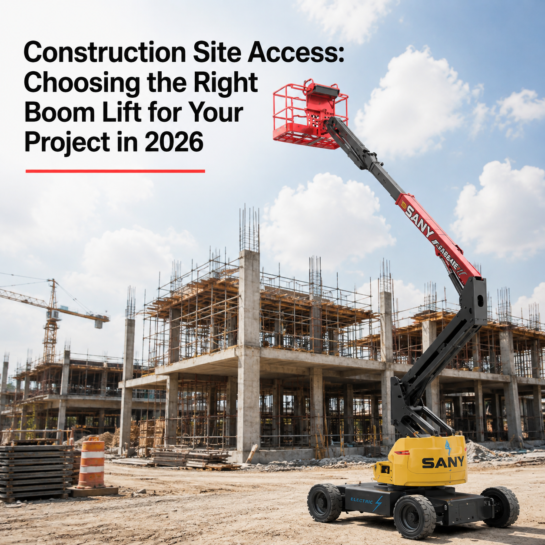
Construction Site Access: Choosing the Right Boom Lift for Your Project in 2026
For construction business owners in Tier 2 and Tier 3 Indian cities, selecting the right construction boom lift can mean the difference between seamless project execution and costly delays. Whether you're working on a multi-story commercial building in Coimbatore or a residential complex in Nashik, accessing hard-to-reach work areas safely and efficiently is non-negotiable. This guide breaks down the essentials: what makes a quality boom lift for construction, how to choose between telescopic and articulating models, and why high reach access equipment matters for your bottom line. We'll also look at practical examples from trusted manufacturers to help you make an informed decision. What Exactly is a Construction Boom Lift? A construction boom lift is a type of aerial work platform designed to elevate workers and tools to significant heights. Unlike scissor lifts that only move vertically, boom lifts feature hydraulic arms (booms) that extend both upward and outward, allowing access to otherwise unreachable spots—think façade work, overhead electrical installations, or rooftop maintenance. These machines operate via articulated or telescopic mechanisms, each suited to different site conditions and access challenges. Telescopic vs Articulating Boom: Which Fits Your Site? Choosing between telescopic vs articulating boom lifts depends largely on your project's layout and obstacles. Telescopic Boom Lifts: Straight, extending reach—ideal for maximum height and horizontal distance Best for outdoor sites with minimal obstructions Common in bridge work, industrial installations, and high-rise construction Articulating Boom Lifts: Jointed arms that navigate around obstacles with precision Perfect for tight spaces, indoor work, or sites with structural barriers Frequently used for maintenance in warehouses and congested urban jobsites Understanding your site's terrain and access requirements will guide this choice. A congested city project? Articulating is your friend. Open ground with extreme height needs? Go telescopic. Why High Reach Access Equipment Matters High reach access equipment isn't just about getting workers up high—it's about doing so safely and productively. According to industry insights, worker safety improves significantly when proper aerial platforms replace makeshift scaffolding or ladders. Plus, productivity gains are real: a single boom lift can replace multiple scaffolding setups, saving both time and labor costs. In India's evolving construction landscape, where projects are scaling up in smaller cities, investing in reliable high-reach equipment translates to fewer accidents, faster completion times, and better resource allocation. Comparing Boom Lift Models: A Quick Reference Source: Sany India Aerial Work Platforms Practical Advice for Construction Site Owners Here's what…
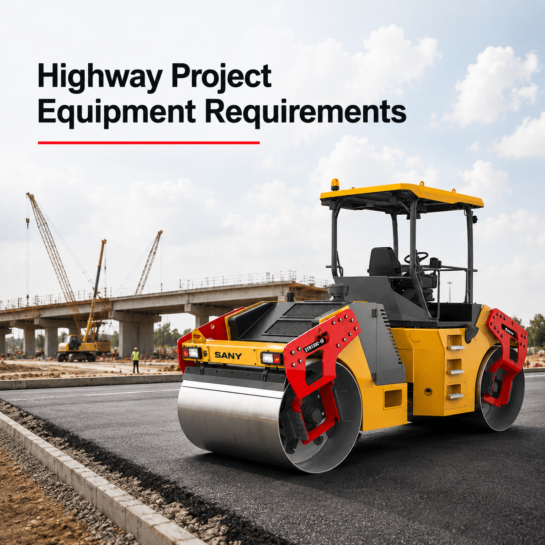
Highway Project Equipment Requirements
TL;DR Summary:Highway construction requires specialized equipment across earthmoving, grading, compaction, and surfacing stagesTier 2 and 3 cities need cost-effective, versatile machinery suited to local terrain and budget constraintsProper equipment selection directly impacts project timelines, safety, and long-term road durabilitySelecting the right highway construction equipment determines whether your national highway project finishes on time, within budget, and meets safety standards. For contractors working in Tier 2 and Tier 3 Indian cities, understanding highway equipment requirements isn't just technical knowledge, it's the difference between profit and costly delays.This guide breaks down the essential road building equipment list needed for efficient highway construction, helping project managers and infrastructure developers make informed machinery investments.Understanding Highway Equipment Requirements by Construction StageHighway projects move through distinct phases, each demanding specific machinery. Here's what works in real-world conditions:Earthmoving and Site PreparationExcavation forms your roadbed foundation. The soil type and project scale determine whether you need compact or heavy-duty excavators. Hydraulic excavators handle variable soil conditions efficiently, reducing manual labor and speeding up site prep by 30-40% compared to older mechanical systems.Grading and LevelingMotor graders create precise road profiles. Modern graders like the STG140C-10 (with 3660mm blade length and 150 HP engine) or the heavier STG170C-10 (180 HP, 18000 kg operating weight) handle everything from rural highways to national corridor projects. Their blade precision ensures proper drainage slopes and surface evenness.Compaction: The Critical Step Most OverlookSkipping proper compaction causes road failures within 2-3 years. Tandem rollers like the STR90C-10 PRO (27.4 kg/cm static linear load) work best for asphalt layers, while pneumatic tire rollers (SPR260C-10 PRO with 200-520 kpa ground pressure range) excel at aggregate compaction. Single drum rollers such as the SSR110C-10 PRO (30 kg/cm drum static linear load) handle base course layers effectively.Surfacing EquipmentAsphalt pavers determine final road quality. The SAP80C-10 handles up to 700 t/h with 300mm max paving thickness, ideal for smaller city roads. For national highway projects, the SAP100C-10 (900 t/h capacity) maintains consistent laying speed across longer stretches.What Are the Operating Costs of Highway Construction Equipment?Fuel consumption typically represents 35-40% of operating costs. Modern engines meeting CEV Stage V standards reduce fuel use by 10-15% compared to older models while maintaining power output. Maintenance intervals matter too—equipment with 500-hour service cycles cuts downtime significantly versus 250-hour cycles.For Tier 2 and 3 projects, calculate total cost of ownership over 5 years, not just purchase price. A grader costing ₹15 lakh more upfront but…
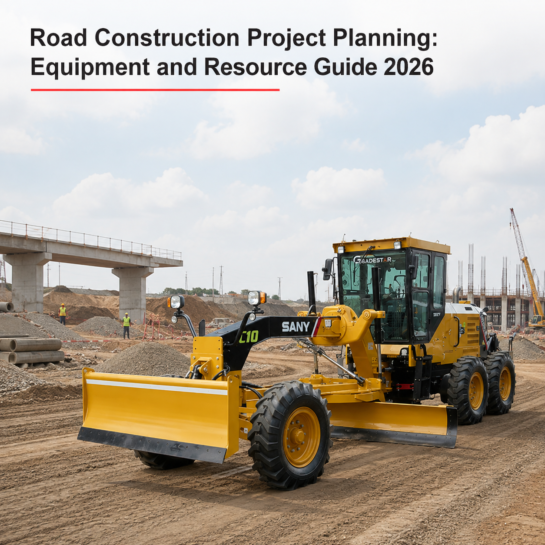
Road Construction Project Planning: Equipment and Resource Guide 2026
TL;DR: Quick Summary Successful road construction project planning starts with selecting the right equipment mix based on project scope, terrain, and budget Sany's road machinery lineup covers all essential categories: motor graders, rollers, milling machines, pavers, and asphalt batching plants Match equipment capacity (operating weight, engine power, functional specs) to your specific project requirements to optimize efficiency and reduce costs Why Equipment Planning Makes or Breaks Road Projects Road construction project planning hinges on three critical decisions: choosing machinery that matches your soil conditions, selecting equipment with appropriate capacity for your project scale, and ensuring fuel efficiency to control operating costs. Whether you're building a new highway or resurfacing an urban road, the right road construction equipment determines project timelines, quality outcomes, and profitability. This guide walks you through Sany's comprehensive road machinery lineup, explaining when and how to use each equipment type. We'll cover motor graders for precise grading, rollers for proper compaction, milling machines for surface preparation, pavers for smooth asphalt laying, and batching plants for consistent material production. You'll also find practical tips for equipment selection and a comparison of key technical specifications to help you make informed decisions. Understanding Road Construction Equipment Types Motor Graders: Precision Shaping for Strong Road Foundations Motor graders create the precise slope and profile your road base needs before paving begins. They're essential for leveling, grading, and finishing operations across highway construction, rural road development, and maintenance projects. Sany's STG140C-10 and STG170C-10 CEV Stage V models bring precision and durability to grading work: STG140C-10: Operating weight of 14,350 kg with a 3,660mm blade length, powered by a 150 HP engine (112 kW). Ideal for medium-scale projects requiring maneuverability and consistent grading quality. STG170C-10: Heavier at 18,000 kg with the same 3,660mm blade, but with 180 HP (135 kW) engine power and 700 N.m max torque. Best suited for larger highway projects demanding higher power and stability. Both models meet CEV Stage V emission standards, making them suitable for projects with environmental compliance requirements. Rollers: Achieving Proper Compaction for Long-Lasting Roads Compaction quality directly impacts road durability. Rollers compress soil and asphalt layers to eliminate air pockets, prevent settling, and create a solid foundation that withstands heavy traffic loads. Sany offers multiple roller configurations for different compaction needs: STR90C-10 PRO: Operating weight of 9,200 kg with evenly distributed module load (4,600/4,600 kg front/rear) and 27.4 kg/cm static linear load. Powered by a…
